


Climbing wall for kids: the benefits and how to get started
What a climbing wall and its routes are, how climbing helps kids, how the safety gear works and how to get ready for the first climb. Plus what to do if your child gets scared on the wall.
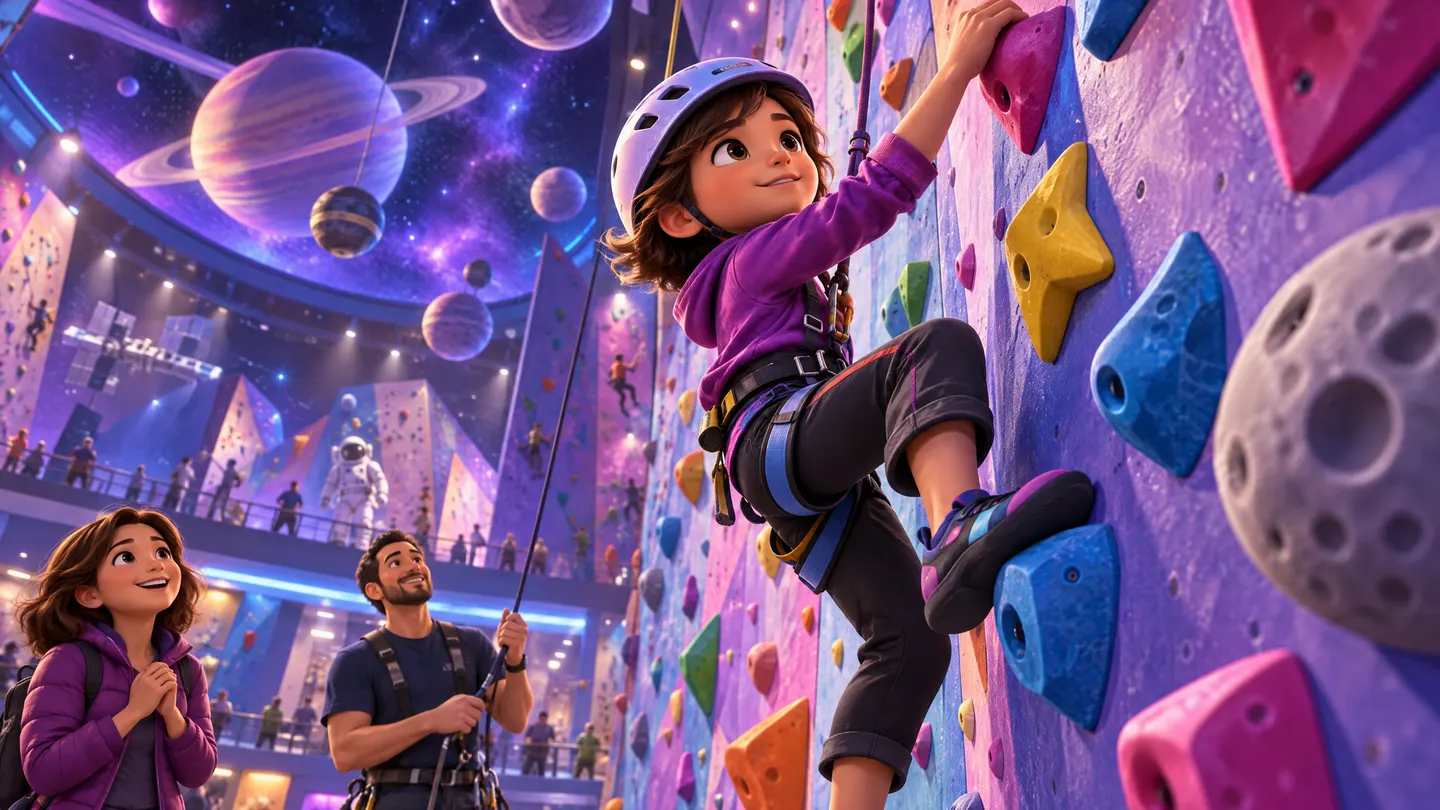
Kids climb whenever they get the chance: the playground climbing frame, the tree in the yard, the back of the sofa. A climbing wall gives that urge the right place. There’s a wall with holds, safety gear and an adult who knows what to do.
In this article, we look at how a climbing wall works, how climbing helps kids and how to prepare for the first climb. We also cover what to do if your child gets scared halfway up. If you’re looking for a climbing wall for kids in Tashkent, there’s one at SkyPark Tashkent, an indoor park in Tashkent City Mall: details are on the Climbing wall page.
What is a climbing wall
A climbing wall is an artificial wall made for climbing. It’s covered in holds: grips of different shapes and sizes. A big hold is easy to grab with your whole hand, while a small one only fits your fingertips or the toe of your shoe.
There are two main kinds of climbing walls. Low bouldering walls are climbed without a rope, with thick mats below. Tall walls are climbed with safety gear, and we’ll explain how that works below.
Holds and routes
Holds make up routes, paths from the bottom of the wall to the top. Often all the holds on one route are the same color: you pick a color and climb using only those. On easy routes, the holds are big and close together, like steps. On harder ones there are fewer, and every move takes some thought.
That’s why climbing is often called a vertical puzzle. Before each move, you need to spot the next hold and decide which hand or foot can reach it.
How climbing helps kids
For a child, a climbing wall is mostly play, but climbing trains a lot of things along the way:
- Strength. The whole body works: arms, legs, back and core. Kids hold their own weight and learn to push with their legs, not just pull with their arms.
- Coordination and balance. You have to coordinate your arms and legs, shift your weight and stay steady on a small hold.
- Focus. On the wall, you only think about the next move. Kids learn to look ahead, plan a route and change the plan if a hold turns out to be awkward.
- Confidence. The wall gives a clear goal: halfway up today, higher next time. Every new hold is a small win the child earned on their own.
- Coping with fear. Up high, kids learn to notice their fear, stop, breathe out and decide what to do next.
One caveat: a climbing wall is fun and exercise, not a treatment. If your child has any health restrictions, check with a doctor before the first climb.
How the safety gear works
On a tall wall, your child is clipped in the whole time. If their hand slips or they get tired, the safety gear stops them from falling, and they simply hang on the rope. In general terms, it works like this:
- Harness — a belt and leg loops made of strong webbing. It goes on at the bottom, before the climb, and someone checks that everything is buckled and fits snugly.
- Rope. It runs from the harness up through an anchor at the top of the wall and back down to the belayer. As the child climbs, the belayer takes in the slack, then lowers them gently.
- Auto belay. Some climbing walls have a device at the top instead of a person with a rope: it takes in the line by itself and lowers the climber smoothly when they let go of the holds.
- Helmet. Many climbing walls hand one out along with the harness.
- Instructor. Explains the rules, helps put on the gear, checks the carabiners and shows how to come down.
For beginners, the hardest part is usually trusting the rope on the way down. Here’s how it’s done: let go of the holds, sit back in the harness like on a swing, and walk down the wall in small steps. It helps if your child tries this the first time close to the ground: they’ll feel the rope hold them and will be calmer higher up.
Ask the instructor on site, or call before your visit, to find out exactly how belaying works on the SkyPark climbing wall, what gear is provided and who belays. Check the conditions for guests on the climbing wall page.
Want to know in advance how belaying works on the SkyPark climbing wall? Call us, and we’ll tell you.
Call usHow to prepare for the first time
Getting ready for a climbing wall is easy, but a few small things are best sorted out at home.
Clothes and shoes
- Comfortable clothes. Sweatpants or leggings and a T-shirt. A skirt or tight jeans make it hard to lift your leg high and put on a harness.
- Closed sports shoes that fit, with flexible soles. Sandals, flip-flops and platform shoes won’t work. Ask the instructor whether special shoes are needed.
- No jewelry. Rings, bracelets, chains and long earrings are best left at home: they catch on the holds and the harness straps.
- Empty pockets. A phone or keys can fall from up high, so hand them to the adult staying below.
Nails and hair
It’s best to trim nails short: a long nail breaks easily on a hold. Tie long hair back in a ponytail or braid so it doesn’t get caught in the rope or carabiner or get in the way of the helmet.
Fear of heights
Fear of heights is a normal reaction, and almost every beginner feels it. Don’t promise it “won’t be scary at all”. Be honest instead: “It might feel a bit scary up there, and that’s okay. You can stop and come down any time you want.”
Agree on a small goal: halfway up the wall, or up to a hold your child picks. Before the climb, let them watch others come down. Once you see that the rope holds, it’s easier to give it a go.
If your child gets scared on the wall
It happens: a child sets off bravely, then freezes halfway, unable to go up or down. The main thing is not to panic along with them.
- Speak calmly and briefly: “You’re clipped in, the rope is holding you. Stand on your feet and rest.” Don’t shout “come on, just a bit more!” from below.
- Help them find a foothold. Tell them where to put their foot: “there’s a big hold just to the right of your knee.” Standing on their feet, they can catch their breath.
- Give them a choice: “One more step, or shall we come down?” When the decision is theirs, it’s easier to calm down.
- Leave the descent to the instructor. They know how to help a scared child get down.
- Praise how far they got. Coming down from halfway is still an achievement. Praise their courage and how far they climbed, not whether they reached the top.
- Don’t shame them or compare them with other kids. That only makes the fear worse.
Often a child climbs higher the second time: fear shrinks once you know how everything works. And if not, that’s fine: the heights can wait until next time.
The climbing wall at SkyPark Tashkent
The climbing wall is part of Activity Park at SkyPark Tashkent, an indoor space-themed amusement park in Tashkent City Mall (7 Botir Zokirov Street, Tashkent). The park is under one roof, so you can climb in any weather. The conditions for guests are on the Climbing wall page, prices are on the Prices and tickets page, and directions are on the Contact us page.
After the climb, you can take a break at the Sky Club family cafe right in the park. And if your child loves it so much they want to bring friends, you can celebrate a fully arranged birthday party at the park.
A first step toward the zipline
On a climbing wall, the child decides how high to go. It’s where they put on a harness for the first time, learn to trust the rope and notice that heights are less scary when you’re clipped in.
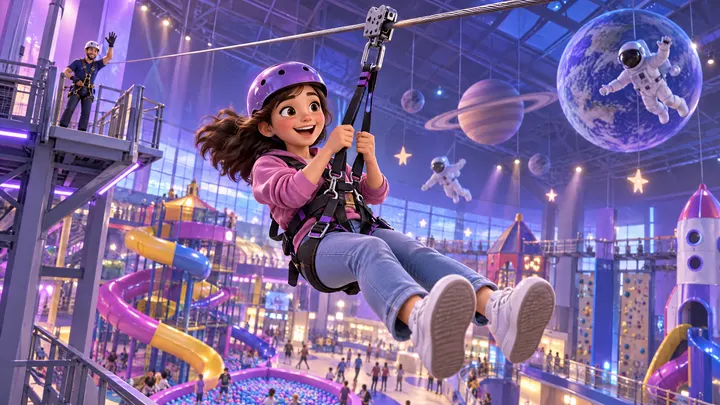
After that, it’s easier to try other high rides. At Activity Park, there’s the zipline, where you fly along a cable above the hall, and the free fall. If heights aren’t their thing yet, start with speed: the slides and tubing and the sports trampoline build courage and coordination too.
To find out in advance which rides your child can go on, open Find rides by age on the Activity Park page: choose your child’s age, and the site will highlight the rides that fit.

Planning a climbing wall visit with your child? Check the ticket prices, and call us with any questions about safety gear and conditions.
Prices and ticketsFrequently asked questions
How old does a child need to be for a climbing wall?
It depends on the wall’s rules. For the SkyPark climbing wall, see the climbing wall page and Find rides by age, and check by phone before your visit.
What should my child wear to a climbing wall?
Comfortable sportswear and closed sports shoes that fit. Take off jewelry, tie long hair back and trim nails short.
How are kids kept safe on a climbing wall?
Usually the child climbs in a harness attached to a rope or an auto belay, with an instructor nearby. Ask the instructor or call us to find out how it works at SkyPark.
What should I do if my child gets scared up on the wall?
Speak calmly, help them find a foothold and give them a choice: one more step or back down. Coming down from halfway is still an achievement, so praise how far they got.
Is there an indoor climbing wall for kids in Tashkent?
Yes, at SkyPark Tashkent in Tashkent City Mall: the climbing wall is part of Activity Park. Details are on the Climbing wall page.
More articles

Come and visit: call us or send a request, and we will help.